Every August, we invite you to make a Faith Promise – a pledge toward the ministries and mission partners we support beyond our own walls. One of those partners is the James 1:27 Trust, a Pretoria-based ministry that has walked alongside vulnerable children and families in our region for more than twenty years, named for the New Testament call to “look after orphans and widows in their distress”.
Founded in 2004 by Robert Botha after he addressed the global orphan crisis at a fundraiser in England, the Trust has always focused on multiplying the efforts of others rather than doing everything itself – building crowdfunding tools and systems (it was the first in Africa to use enterprise resource planning software for orphan care) that connect caring organisations with donors like you.
As Faith Promise season approaches, the Trust has shared an update – both on a shift in how it works, and on the real families your giving helps support.
Learning to Enter Fragile Systems
A beekeeper can’t control a hive. They can only learn to work with it – a living, fragile system that produces sweet honey but can turn aggressive, or collapse, if handled wrongly. The good beekeeper knows when to suit up, when to calm the bees, and when it’s safe to enter.
The Trust is learning to approach its work the same way – moving away from trying to fix or force change in the schools, families and communities it serves, and toward supporting the people already inside those systems: the ones quietly listening, coordinating, and holding things together.
This shift has real roots. For twenty years, the Trust’s model centred on holistic care for child-headed households. Covid-19 exposed just how difficult that model was to sustain, prompting the Trust to rethink its approach from the ground up.
Introducing the Social Change Practitioner
What emerged is the Social Change Practitioner (SCP) – embedded directly in a school to respond to complex learner vulnerability. An SCP is not a therapist, teacher, funder or administrator. They are a relational anchor: someone who notices, listens, builds trust, coordinates support and helps struggling learners stay visible to the adults around them – more a traffic coordinator than a case worker, unblocking flows of care between distressed children, stretched teachers, fractured families and overloaded external services.
The pilot began with two SCPs. By the end of 2026, they’ll be working across four schools in the Pretoria North District, with the endorsement of the Gauteng Department of Education. From there, the Trust plans to grow deliberately – two, four, eight, sixteen – expanding slowly and with care rather than rushing to scale. One practitioner, two years into the role, is already showing what long-term relational trust looks like; a second, starting later this year, will show what early formation looks like.
Behind both practitioners sits a newly co-designed digital and organisational system – built with the Trust, the practitioners, a postdoctoral researcher and Sofserv – combining reflective practice, spiritual formation, coaching, wellbeing monitoring and organisational learning. Its purpose, simply put: to hold structure so that humans can stay human and be valued as created in God’s image.
Families Still Walking This Journey
While the new model develops, the Trust continues supporting long-standing families. Tiisetso Maluleka, the backbone of her household, rewrote and passed her matric after years of setbacks – made possible, she says, by counselling support and knowing her family had enough to eat. Her sister and nieces are following close behind: Gomolemo is applying to study Social Work at the University of Pretoria, Kedibone is finishing her matric while working toward a career in music, and Kefilwe is pushing hard in Grade 10 toward university. Percy Mangwedi, Tiisetso’s brother, now works as a Care Worker while running his own tutoring business, hoping to formalise his passion for teaching.
Rosina Malepane, raising three daughters alone in Hammanskraal, is studying towards a diploma in Early Childhood Development while working at a creche and braiding hair to make ends meet. Having lost her own parents young, her deepest wish is simply to see her children grow up and reach their own goals – and she says it’s the emotional support from the Trust, more than anything financial, that has carried her through.
Presence Before Intervention
One SCP reflected: their work is about building trust first – a safe space where children can be heard, their wellbeing tracked, and referrals coordinated to social workers, psychologists and clinics, so no child’s story gets lost. The Trust’s philosophy is simple: presence before intervention, trust before disclosure, continuity over crisis response.
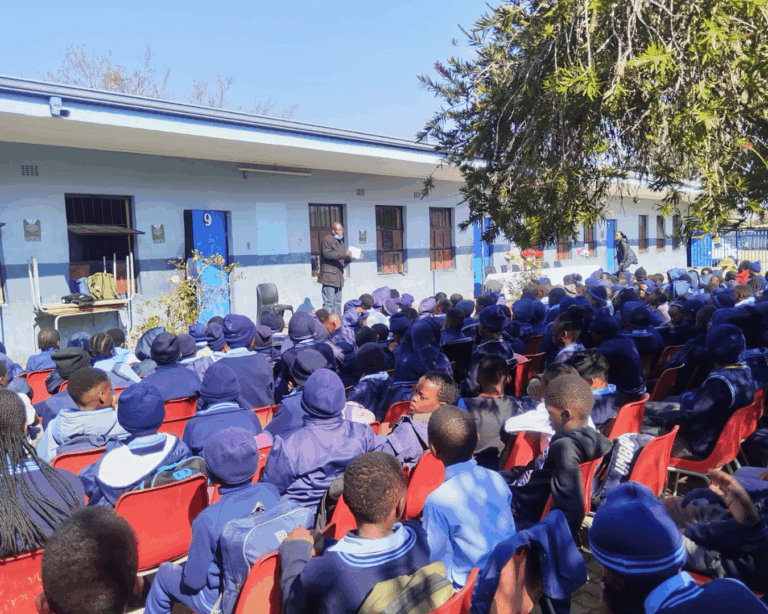
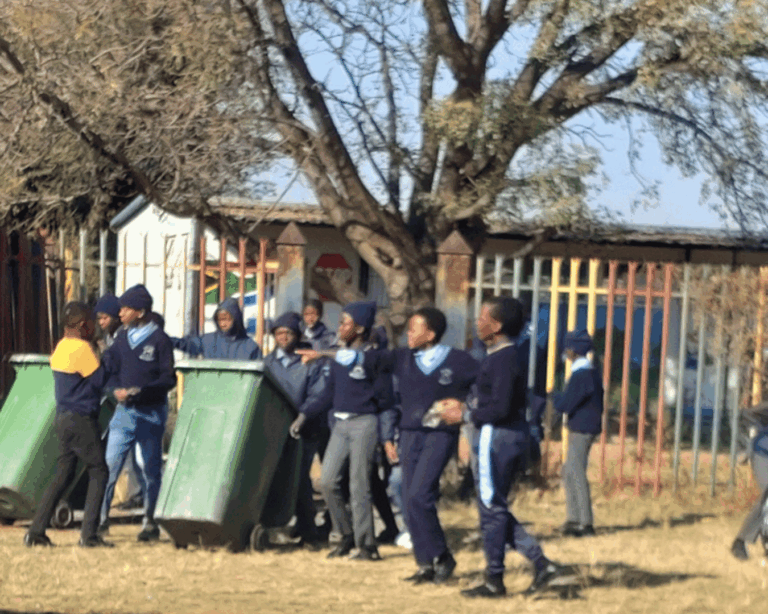
That commitment was visible at Mandela Day 2025, when learners, teachers, parents and community leaders gathered at Namo Primary School in Stinkwater to clean the grounds together – a small, visible sign of the deeper, daily work of building a school where every child feels seen.
For James 1:27 Trust, change comes one relationship, one child, at a time. As we head into Faith Promise season, that’s the partnership we invite you to continue with us.
Learn more at www.james127trust.org.